Types of Gutter Guards: Which Works Best for Georgia and Alabama Homes?

Not all gutter guards work the same way, and for homeowners under Georgia and Alabama's heavy tree canopy, picking the wrong type can mean trading one clogging problem for another. In this guide, we'll break down the main types of gutter guards on the market, how each one handles the leaves, pine straw, and seed pods common across the region, and what to weigh before choosing one for your home.
Quick Summary
- Micro-mesh guards offer the broadest protection against fine debris like pine straw and seed pods, though at a higher cost than other types.
- Standard mesh or screen guards cost less than micro-mesh but let smaller debris through more easily.
- Surface tension (reverse-curve) guards shed large leaves very well but need a specific roofline and installation angle to work as designed.
- Foam and brush inserts are generally the most affordable options but typically need more frequent maintenance.
- No gutter guard eliminates maintenance entirely; every type still needs occasional checking.
- Installation quality has as much effect on performance as the guard type itself.
- The right guard type depends on the specific mix of trees around a home, not just price.
Why Gutter Guard Type Matters More in Georgia and Alabama
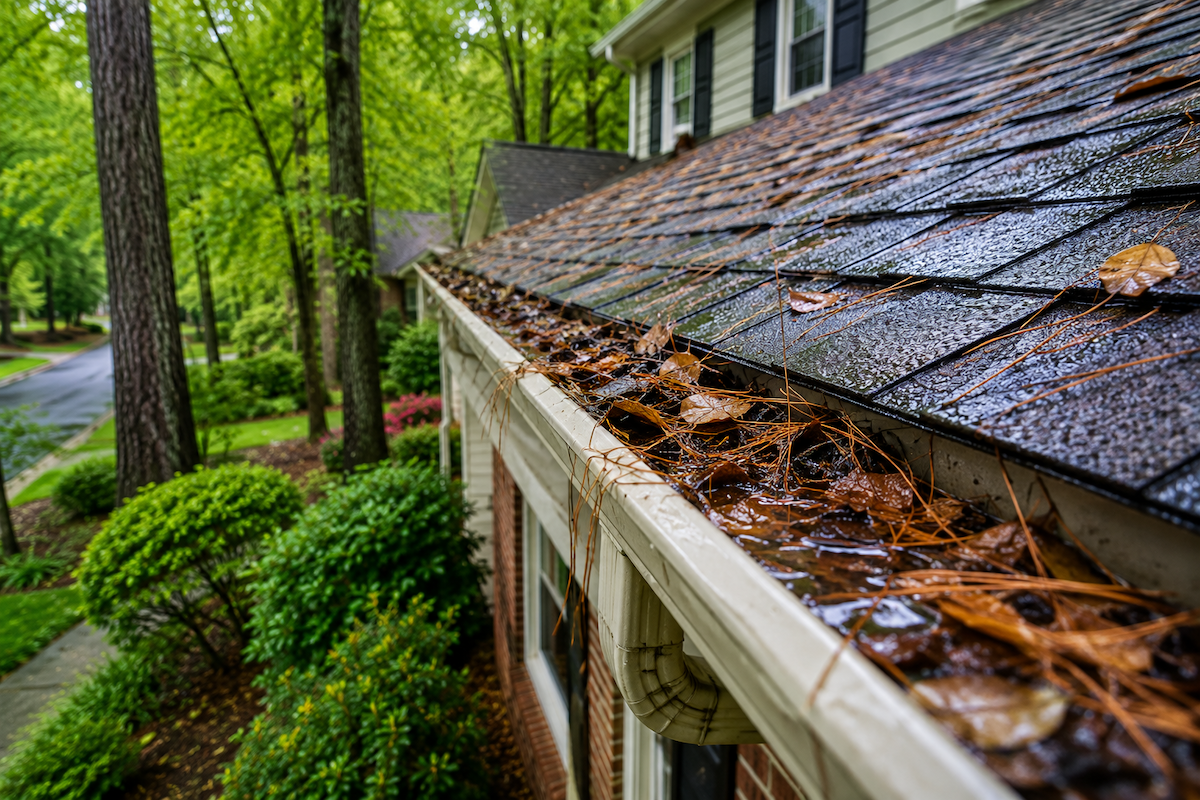
Homes across Atlanta, Marietta, Cartersville, Rome, and other heavily wooded parts of Georgia and Alabama deal with a mix of debris that changes by season: hardwood leaves in fall, pine straw and seed pods for much of the year, and heavy rain that tests every gutter system during storm season. A gutter guard that works well in a neighborhood with mostly oak and maple trees may perform very differently on a property surrounded by pines. Matching the guard type to the debris your home actually deals with is what determines whether it helps or just shifts the clogging problem somewhere else.
The Main Types of Gutter Guards
Micro-Mesh Guards
Micro-mesh guards use a very fine metal screen, often stainless steel, that sits over the gutter and blocks even small debris like pine straw, seed pods, and granules while letting water through. This fine mesh generally handles the widest range of debris types, which makes it a common choice under heavy tree canopy. The tradeoff is that the fine mesh itself can collect a layer of dust, pollen, and grit over time, so it isn't entirely maintenance-free.
Standard Mesh or Screen Guards
Standard mesh and screen guards use a coarser opening than micro-mesh. They block larger leaves and debris reasonably well but tend to let smaller material like pine straw and seed pods through, which can still build up inside the gutter over time. These guards are often a lower-cost option than micro-mesh, with a corresponding tradeoff in how much fine debris they actually keep out.
Surface Tension (Reverse-Curve) Guards
Surface tension guards use a curved solid cover that relies on water clinging to the surface and curling into the gutter channel, while larger leaves and debris slide off the edge onto the ground. These guards handle large leaves well and tend to be very effective at shedding bulk debris, but they can struggle with very fine material and typically require a specific installation angle and roofline profile to work as designed.
Foam Inserts
Foam gutter guards are triangular foam inserts that sit inside the gutter channel, letting water pass through the foam while blocking larger debris on top. They're generally one of the lower-cost options and simple to install, but foam can hold moisture, degrade over time from UV exposure, and in some cases allow smaller seeds or debris to take root in the foam itself.
Brush Inserts
Brush guards are cylindrical bristle inserts that sit inside the gutter, catching larger debris on top of the bristles while allowing water to flow underneath. They're inexpensive and easy to install, but leaves and pine straw can accumulate on top of the bristles over time, and the brush itself needs periodic cleaning or replacement.
Comparing Gutter Guard Types
Guard TypeHandles Fine Debris (Pine Straw, Seeds)Handles Large LeavesTypical Maintenance LevelMicro-meshGoodGoodLow to moderateStandard mesh/screenFairGoodModerateSurface tensionFairVery goodLow, if installed correctlyFoam insertFairFairModerate to highBrush insertFairFairModerate to high
Gutter Guards at a Glance
In short: micro-mesh guards generally offer the best all-around protection against the mix of leaves, pine straw, and seed pods common in Georgia and Alabama, though at a higher cost than foam or brush inserts. Surface tension guards excel with large leaves but need the right roofline to perform well, while standard mesh, foam, and brush options offer lower upfront investment with more frequent maintenance in return.
Step-by-Step: Choosing a Gutter Guard Type
- Identify the dominant debris type around your home, such as hardwood leaves, pine straw, seed pods, or a mix.
- Check your roofline and gutter pitch to see whether a surface tension guard is a realistic fit.
- Weigh upfront cost against how much ongoing maintenance you're willing to do.
- Ask any contractor you're considering how they handle seams, end caps, and attachment to the gutter's front lip.
- Confirm whether the manufacturer's warranty covers the specific guard type and installation method.
- Request a professional evaluation to match a guard type to your home's actual tree cover.
Gutter Guard Types Summary
- Micro-mesh: best all-around protection for mixed debris, at a higher cost
- Standard mesh/screen: moderate protection, lower cost than micro-mesh
- Surface tension: excellent for large leaves, needs the right roofline
- Foam and brush inserts: lowest cost, highest maintenance over time
- Installation quality affects performance as much as guard type
- A professional evaluation is the most reliable way to choose
Installation Quality Matters as Much as the Guard Type
Even the best gutter guard can underperform if it isn't installed to match the gutter's pitch, size, and the home's specific roofline. Gaps at seams, incorrect angles on surface tension guards, or guards that don't fully seat against the gutter's front lip are common installation issues that reduce a guard's effectiveness regardless of which type is chosen.
Bottom Line: Match the Guard to Your Trees, Not Just the Price Tag
The right gutter guard depends less on which option is cheapest and more on what kind of debris your home actually deals with throughout the year. A property surrounded by pines has different needs than one shaded mostly by hardwoods, and a professional evaluation is the most reliable way to match a guard type to your specific home.
Right Hand Roofing & Gutters is a family-owned company serving Georgia and Alabama since 2005. Our team backs its workmanship with a lifetime guarantee, and we're happy to walk through gutter guard options that fit your home's tree cover and roofline.
Request your free roof report (a $100 value, offered at no cost) at right-handroofing.com/free-roof-report or call us at 678-840-2255.
Frequently Asked Questions
What type of gutter guard works best under pine trees?
Micro-mesh guards generally handle pine straw and seed pods better than standard mesh, foam, or brush inserts, since their fine screen blocks smaller debris that other guard types tend to let through. No guard is entirely maintenance-free under heavy pine cover, but micro-mesh typically needs less frequent attention.
Do gutter guards eliminate the need for gutter cleaning?
No. All gutter guard types reduce how often gutters need cleaning, but none eliminate maintenance entirely. Dust, pollen, and fine debris can still collect on top of any guard over time, and periodic checks, especially after major storms, are still worthwhile.
Are surface tension gutter guards a good fit for every roof?
Not always. Surface tension guards rely on a specific curve and installation angle to work as designed, so they fit some roof pitches and eave styles better than others. A professional can confirm whether your roofline is a good match before installation.
How long do gutter guards typically last?
Lifespan varies by material and guard type. Metal micro-mesh and surface tension guards tend to hold up longer than foam or brush inserts, which can degrade faster from UV exposure and moisture. Manufacturer warranties differ, so it's worth confirming coverage terms for whichever guard type you choose.
Can gutter guards be added to existing gutters, or do gutters need to be replaced first?
In most cases, gutter guards can be added to existing gutters that are in good condition. If the existing gutters are damaged, undersized, or improperly pitched, addressing those issues first will help the guards perform as intended.