Why Your Gutters Fail Faster in Atlanta (City in a Forest)
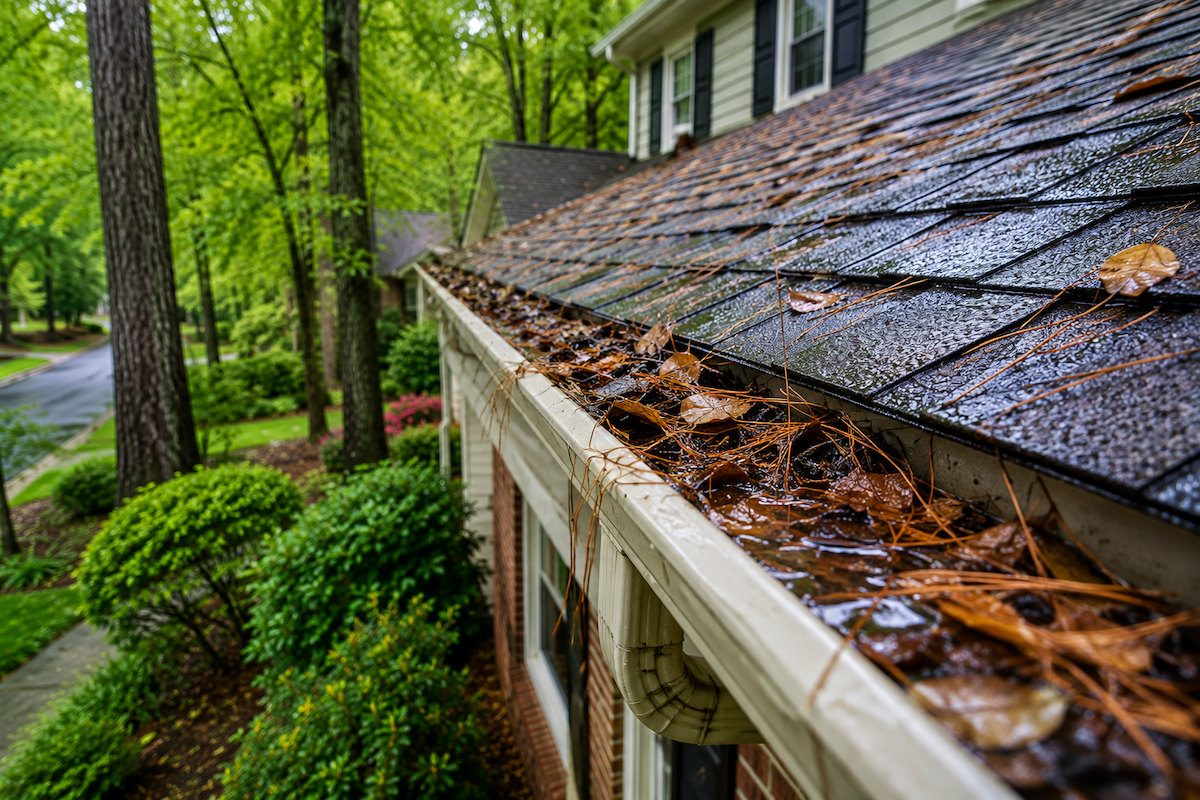
If you feel like you're cleaning your gutters more often than your friends in other cities, you're not imagining it. Atlanta's gutters really do fail faster, and the main reason is right above your head. Nicknamed the "City in a Forest," Atlanta has one of the densest urban tree canopies in the country, and that canopy, combined with heavy rainfall, intense spring pollen, and storm activity, puts gutters under year-round stress.
Below, you'll find exactly why gutters fail faster here, the warning signs to watch for, and what actually keeps your system flowing.
Quick Summary
- Atlanta's tree canopy covers roughly 46 to 48% of the city, among the highest of any major U.S. city, which means constant leaves, needles, seeds, and pollen falling into gutters.
- The metro receives about 50 inches of rain a year, often in intense downpours that overwhelm clogged or undersized gutters.
- Pine needles, oak leaves, maple "helicopter" seeds, and sweetgum balls are especially good at clogging gutters and downspouts.
- Spring pollen mixes with rain to form a heavy sludge that hardens in gutter troughs and blocks flow.
- Because debris falls year-round, many Atlanta homes need cleaning two to four times a year, far more than the once-a-year norm elsewhere.
- Clogged gutters lead to overflow, fascia rot, foundation problems, and pest issues, and the damage often costs far more than prevention.
- Gutter guards, larger 6-inch gutters, proper pitch, and secure hangers are the most effective defenses for Atlanta homes.
Atlanta Is Literally a City in a Forest
Atlanta earned its "City in a Forest" nickname honestly. Studies by Georgia Tech and Trees Atlanta have measured the city's urban tree canopy at around 46 to 48% of its total land area, one of the highest percentages of any large American city. Much of that canopy sits directly over single-family homes.
Beautiful as it is, that canopy is the single biggest reason gutters fail faster here. Every one of those trees sheds something into your gutters, and unlike a yard with a few ornamental trees, Atlanta's mature hardwoods and pines drop debris in serious volume.
Why Atlanta Gutters Clog and Fail Faster
Several local factors stack on top of each other, which is what makes Atlanta gutters wear out and fail ahead of schedule.
Year-Round Tree Debris
The big issue is that debris doesn't follow a tidy seasonal schedule here. Different trees shed at different times, so something is always falling:
- Oak trees drop heavy volumes of leaves in fall, plus acorns and pollen in spring.
- Pine trees shed needles continuously, year-round, and those needles interlock into dense mats that water can't pass through.
- Maple trees release winged "helicopter" seeds in spring that wedge into seams and downspouts.
- Sweetgum trees drop spiky seed balls that are notoriously hard to clear from standard gutters.
- Evergreens like magnolia and red cedar keep shedding waxy leaves even in winter.
The result is that a system left alone fills and clogs much faster than in regions with sparser tree cover.
Heavy, Intense Rainfall
Atlanta sits in a humid subtropical zone and receives roughly 50 inches of rain a year, well above the national average. Just as important as the total is the intensity: summer convection storms can dump rain at rates of two to three inches per hour. A clogged or undersized gutter simply can't move that volume, so water overflows the edge, runs down the fascia and walls, and pools near the foundation.
Spring Pollen Sludge
Anyone who has lived through an Atlanta spring knows the yellow coating on everything. That pollen settles into gutters and mixes with rain to form a thick, paste-like sludge. As it dries, it hardens in the bottom of the trough, restricting flow and trapping additional debris. Pollen season alone can knock a clean gutter system out of commission.
Storms, Wind, and Hail
Metro Atlanta sees frequent severe thunderstorms, with damaging winds, hail, and the occasional tropical remnant. High winds can dislodge large amounts of debris at once and, if gutters aren't securely mounted, can pull them away from the fascia entirely. Hail dents and damages gutter surfaces and cheaper guard systems.
Georgia's Red Clay Soil
Atlanta's distinctive red clay holds water and shifts as moisture changes, expanding when saturated and shrinking when dry. When overflowing gutters or poorly placed downspouts dump water near the foundation, that clay movement puts real stress on your home's structure, turning a gutter problem into a much more expensive foundation problem.
What Happens When Atlanta Gutters Fail
When a clogged or failing gutter can't move water away from your home, the consequences add up:
- Overflow down siding and walls, leading to staining and water intrusion.
- Rotted fascia and soffit boards from constant moisture against the wood.
- Foundation damage and erosion as water saturates the clay soil around your home.
- Roof leaks, since backed-up water can be forced under shingle edges during heavy storms.
- Pest and mosquito breeding in the standing water that collects in clogged troughs.
- Landscape damage from sheets of water dumping in concentrated spots.
It's also worth knowing that homeowner's insurance generally does not cover water damage caused by clogged or neglected gutters, since insurers treat it as preventable maintenance rather than sudden accidental damage.
How Often Should You Clean Gutters in Atlanta?
Most homes in other parts of the country get by with one annual cleaning. In Atlanta, that's rarely enough. Because of the year-round debris load, a practical schedule looks like this:
- Clean in late spring or early summer, after pollen season and the first round of spring storms.
- Clean in late fall or early winter, after the bulk of the leaves have dropped.
- Add a third (and sometimes fourth) cleaning if your home is surrounded by pines, oaks, or other heavy-shedding trees.
- Inspect after major storms, since high winds can dump a season's worth of debris in a single afternoon.
Homes under a dense canopy often land on a quarterly schedule. The key is matching your cleaning frequency to your tree cover, not a generic calendar.
How to Protect Your Gutters in Atlanta
You can't change the tree canopy, but you can build a gutter system that stands up to it. The most effective protections for Atlanta homes:
- Gutter guards. A quality micro-mesh guard keeps leaves, pine needles, and seed pods out while letting water through, dramatically cutting cleaning frequency. Fine-mesh systems handle Atlanta's pine needles and pollen far better than basic screens or reverse-curve covers.
- Larger, high-capacity gutters. Upgrading from standard 5-inch to 6-inch gutters with bigger downspouts moves significantly more water during intense storms.
- Secure, closely spaced hangers. Hangers placed at proper intervals keep gutters from flexing and pulling away in high winds and under the weight of heavy water.
- Correct pitch and downspout placement. Proper slope keeps water moving toward downspouts, and extending downspout discharge well away from the foundation protects against clay soil problems.
- Seamless gutters. Fewer seams mean fewer points where leaks and clogs start.
- Routine maintenance. Even with guards, periodic inspection catches sagging, loose fasteners, and early fascia rot before they become major repairs.
The Bottom Line and Your Next Steps
Atlanta gutters fail faster because the very thing that makes the city beautiful, its forest canopy, works against your drainage system every day. Add heavy rain, sticky pollen, frequent storms, and shifting clay soil, and a gutter system designed for a milder climate simply won't keep up. The fix is a combination of the right system, the right protection, and a cleaning schedule matched to your tree cover.
The smartest first step is a professional assessment of your gutters, downspouts, and the trees around your home, so you know whether you need cleaning, repairs, guards, or an upgrade to higher-capacity gutters.
If you'd like clear, no-pressure guidance, Right Hand Roofing & Gutters installs and services seamless gutters, gutter guards, and high-capacity systems across Metro Atlanta and surrounding communities. As a family-owned company serving Georgia and Alabama since 2005, we understand exactly what our local trees and weather do to gutters, and we back our work with strong warranties. Request a free assessment at right-handroofing.com/free-roof-report or call 678-840-2255.
Frequently Asked Questions
Why do gutters clog so fast in Atlanta?
Atlanta's "City in a Forest" tree canopy covers roughly 46 to 48% of the city, so gutters collect a heavy, year-round load of leaves, pine needles, seeds, and pollen. Combined with about 50 inches of annual rain and sticky spring pollen that hardens into sludge, debris builds up and blocks gutters far faster than in cities with fewer trees.
How often should I clean my gutters in Atlanta?
Most Atlanta homes need cleaning at least twice a year, once after spring pollen season and once after fall leaf drop. Homes surrounded by pines, oaks, or other heavy-shedding trees often need quarterly cleaning. It's also smart to inspect gutters after major storms, since high winds can dislodge a lot of debris quickly.
Do gutter guards work against Atlanta's pine needles and pollen?
Quality micro-mesh gutter guards work well against Atlanta's tree debris, including pine needles and seed pods, while letting water flow through. Fine-mesh systems handle small debris and pollen far better than basic screen or reverse-curve guards. No guard is fully maintenance-free, but the right one dramatically reduces how often you need to clean.
What size gutters are best for Atlanta's heavy rain?
Many Atlanta homes benefit from upgrading to 6-inch gutters with larger downspouts rather than the standard 5-inch size. The added capacity helps move the high water volume from Atlanta's intense convection storms, which can drop two to three inches of rain per hour and overwhelm smaller systems.
Does homeowner's insurance cover damage from clogged gutters in Atlanta?
Generally, no. Insurers typically treat water damage from clogged or neglected gutters as preventable maintenance rather than sudden, accidental damage, so those claims are often denied. Sudden storm damage, such as a tree falling on your gutters, is more likely to be covered. Always review your specific policy and document any storm damage promptly.













.webp)
.webp)
.webp)
.webp)
.webp)
.webp)


.webp)
.webp)
.webp)

.jpg)


.jpg)